
Online games connect millions of players through the internet, making it possible to compete, communicate, and socialize with people from almost anywhere. But this convenience also raises an important privacy question: can an online game reveal your location?
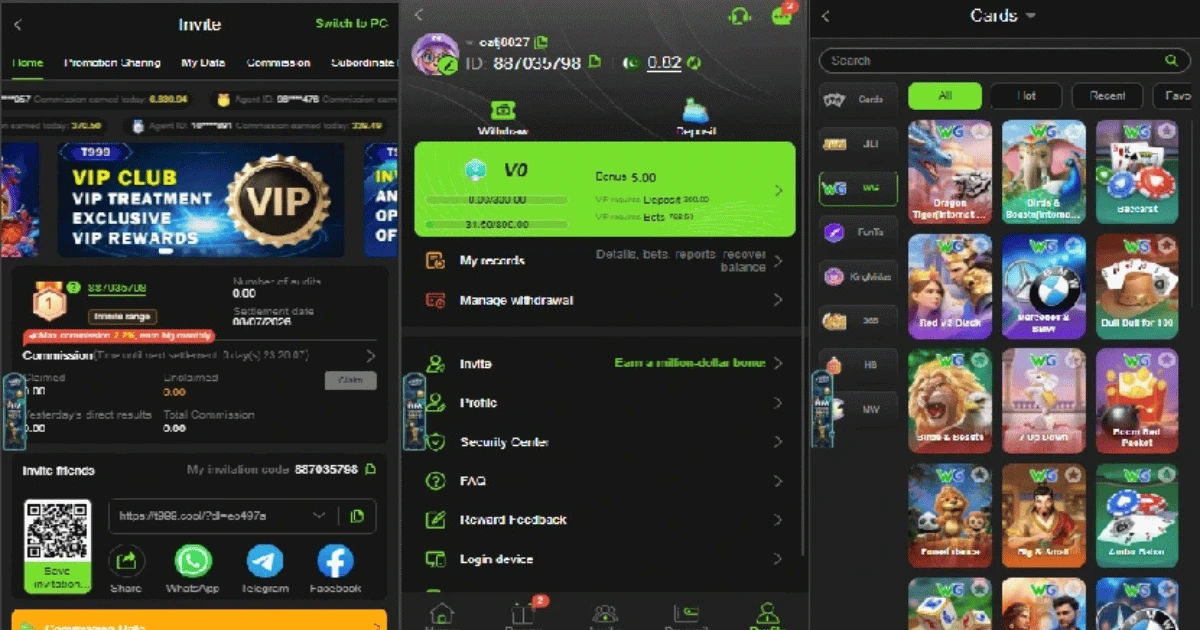
The short answer is that it can sometimes expose information that helps identify your general location, although it does not usually reveal your exact home address automatically. Understanding how this happens can help players protect themselves while enjoying games such as T999 and other online platforms.
How Online Games Can Identify Your General Location
When you play an online game, your device communicates with game servers through an internet connection. This communication requires technical information, including an IP address.
An IP address can provide an approximate idea of where an internet connection is located. Depending on the service and available databases, it may indicate a country, region, city, or nearby area.
This does not normally mean that another player can immediately see your street address. IP-based location is generally approximate. However, it can still provide useful information to someone who is trying to learn more about you.
Games such as T999 may use servers located in different regions. The server a player connects to can sometimes provide clues about the player's general geographic area, although server location alone does not prove where the player lives.
What Is an IP Address?
An IP address is a numerical identifier associated with a device or network connection when it communicates over the internet.
Think of it as a technical return address used by internet traffic. Websites, game servers, and online services use IP addresses to send information to the correct destination.
There are two major types of IP addresses that people commonly encounter: public and private IP addresses.
A private IP address is normally used within a local network, such as a home Wi-Fi network. A public IP address is used to communicate with services outside that network.
Online game servers generally interact with the public-facing connection rather than simply seeing the private address assigned to your computer or phone.
Does an IP Address Reveal Your Exact Address?
Usually, no.
An IP address does not normally contain your exact street address, apartment number, or house number. Location databases associate IP addresses with approximate geographic areas.
The accuracy can vary considerably.
In some cases, an IP address may appear to identify a city. In other situations, it may point to a nearby city, an internet service provider's regional office, or another location associated with the network.
Therefore, someone who obtains your IP address should not automatically be able to determine your exact physical location.
However, privacy risks should still be taken seriously, particularly when technical information is combined with details that you voluntarily share.
Can Other Players See Your IP Address?
Whether another player can see your IP address depends on how the game and its network architecture work.
Many modern online games use centralized servers. In this setup, players connect to the company's servers rather than directly connecting to one another. This can make it harder for ordinary players to obtain another player's IP address.
Older games, peer-to-peer systems, voice-chat applications, private servers, and certain multiplayer connections can work differently.
For a platform such as T999, players should review the service's privacy policy and security information rather than assuming that every game handles network information in exactly the same way.
How Voice Chat Can Create Privacy Risks
Voice chat is one of the most useful features in modern gaming, but it can also create privacy concerns.
A player may reveal personal information without realizing it. For example, they might mention their school, workplace, neighborhood, city, local sports team, or favorite nearby restaurant.
Individually, these details may seem harmless.
However, several small details can sometimes be combined to create a surprisingly accurate picture of someone's identity or location.
A player enjoying T999 or another multiplayer game should therefore avoid sharing sensitive personal information with strangers, especially during public voice or text conversations.
Can a Game Reveal Location Through GPS?
Some games use location services, especially mobile games designed around real-world geography.
If an application has permission to access GPS or other location services, it may be able to determine a much more precise location than an IP address can provide.
This is different from ordinary online gaming.
A game does not automatically receive GPS information simply because it is connected to the internet. Location access generally depends on the operating system's permissions and the application's features.
Before installing or using T999, players should check which permissions the application requests and consider whether those permissions are necessary for the features they want to use.
Location Sharing on Mobile Devices
Modern smartphones can share location information with applications, browsers, and other services.
Android and iPhone devices provide permission controls that allow users to decide whether an application can access location information.
Depending on the operating system, users may be able to select options such as allowing location access only while using an application, allowing access all the time, or denying access entirely.
Players should regularly review these settings.
If a game does not need location services for its core features, disabling unnecessary location access can reduce the amount of personal information the application can collect.
Can Social Features Reveal Your Location?
Sometimes the biggest privacy risk does not come from the game itself.
Gaming platforms often include profiles, usernames, friends lists, messaging, achievements, clans, leaderboards, and social features. Players may connect these accounts to social media or other online profiles.
Suppose a player uses the same username for T999, Instagram, a gaming forum, and another public account. Someone could potentially search that username across different services.
If one of those profiles contains a real name, school, workplace, photographs, or location information, the separate pieces of information may become connected.
This is known as digital footprint linking.
Why Your Username Matters
A username may appear anonymous, but it can become identifying when reused across multiple platforms.
Using a unique gaming username can provide an additional layer of privacy.
Players should also avoid placing their full name, phone number, home city, school name, or other sensitive information in a public gaming profile.
For users of T999, keeping a gaming identity separate from personal social-media accounts can make it more difficult for strangers to connect gaming activity with real-world information.
Can Screenshots Reveal Your Location?
Yes, sometimes.
Players frequently share screenshots of games, profiles, conversations, or achievements. These images can accidentally contain information that reveals where someone lives or spends time.
A screenshot might show a notification, browser tab, map, username, local event, weather information, or another identifying detail.
Even a background photograph can contain clues.
Before sharing screenshots from T999 or other games, players should inspect the image carefully and remove or hide unnecessary personal information.
Location Can Also Be Revealed Through Photos
Photos connected to gaming profiles can contain more information than people expect.
Some photographs may include metadata, although the availability and handling of such information varies between devices and platforms.
More importantly, the visible content of a photograph can itself reveal a location.
Street signs, landmarks, school buildings, business names, road signs, and recognizable neighborhoods can all provide clues.
Players should avoid sharing photographs that expose sensitive information about where they live, study, or regularly spend time.
How Scammers Use Location Information
Scammers and malicious users may collect small pieces of information from gaming communities.
They may start by asking seemingly innocent questions such as where someone lives, what school they attend, or whether they are near a particular landmark.
One question may not seem dangerous.
The problem occurs when multiple questions are combined.
A person who knows your approximate location, age group, interests, username, and social-media identity may have enough information to target you with scams, impersonation attempts, harassment, or unwanted contact.
This is why privacy should be treated as part of gaming safety.
Signs That Someone Is Trying to Find Your Location
Be cautious if another player repeatedly asks questions about your physical location.
Warning signs can include requests for your exact address, school, workplace, daily schedule, nearby landmarks, or live location.
Another warning sign is when someone asks you to click an unfamiliar link or download a file after gaining your trust.
Some attackers may pretend to be friends, moderators, tournament organizers, or technical support representatives.
If a player becomes uncomfortable with these questions, they should stop sharing information and use the platform's blocking or reporting features.
How to Protect Your Location While Gaming
There are several practical steps players can take.
Use Strong Privacy Settings
Start by checking the privacy settings of your game account.
Limit who can send messages, view your profile, add you as a friend, or see your activity.
If T999 provides privacy controls, use the most restrictive settings that still allow you to enjoy the features you want.
Avoid Sharing Your Exact Location
There is rarely a good reason to tell strangers your home address.
Avoid sharing your exact location in public chats, voice channels, gaming forums, or comments.
If someone asks where you live, giving a broad region may be safer than providing a precise location, although you are not required to share even that.
Use a Unique Username
A separate gaming username makes it harder to connect your game account to other online identities.
Do not assume that changing only a few characters is enough if the original username is already connected to your personal accounts.
Keep Personal Information Private
Do not share passwords, verification codes, phone numbers, financial information, addresses, or private account details with other players.
Legitimate game support staff should not need your password.
Be Careful With Links
An unfamiliar link may lead to a phishing page or another malicious website.
A message claiming that you have won a prize in T999, for example, should be treated carefully if it asks you to enter account credentials or download an unexpected program.
When in doubt, access the official service through a trusted website or application rather than clicking a suspicious message.
What About VPNs?
A virtual private network, commonly called a VPN, can route internet traffic through another server.
As a result, the game server may see the VPN server's public IP address instead of the player's normal public IP address.
This can make IP-based location information less representative of the player's actual location.
However, a VPN is not an invisibility tool.
It does not prevent a person from voluntarily revealing their location through conversation, photographs, social-media profiles, GPS permissions, or other information.
VPNs can also affect game performance, including latency and connection stability. Players should therefore understand both the benefits and limitations before using one with T999 or another online game.
What Game Companies Can Know
Players should distinguish between what other players can see and what the game operator may be able to access.
The company operating an online game may collect technical information such as IP addresses, device information, account activity, crash reports, and connection details.
The exact information depends on the service.
Privacy policies explain what information is collected, why it is collected, how long it may be retained, and whether it is shared with third parties.
Reading these policies can help players understand the difference between public information and information available to the service provider.
Can Location Be Hidden Completely?
Complete anonymity online is difficult.
Even when someone uses privacy tools, they may reveal identifying information through their account, conversations, photographs, payment information, social connections, or online behavior.
The goal should therefore be reasonable privacy rather than assuming that one tool can make a person completely invisible.
For T999 players, good privacy habits can be more valuable than relying on a single technical solution.
What Parents Should Know
Parents and guardians can help younger players develop safe gaming habits.
Children should understand that a person they meet online may not be who they claim to be.
They should never feel pressured to provide an address, school name, phone number, live location, or private photograph.
Parents can also review account privacy settings, communication controls, and application permissions.
Teaching children why information should remain private is generally more useful than simply telling them not to talk to strangers.
What to Do If You Think Your Location Was Exposed
If you believe your location or personal information has been exposed, remain calm.
First, stop communicating with the person who appears to be collecting the information.
Block the account if appropriate and report suspicious behavior to the game's moderation or safety team.
Review your account privacy settings and remove unnecessary personal details.
If the same username is used elsewhere, consider changing it on public accounts.
Also review location permissions on your phone and computer.
If sensitive information such as passwords was exposed, change the affected passwords immediately and enable multi-factor authentication where available.
Frequently Asked Questions
Can an online game know my city?
An online game may be able to estimate your general location from your IP address. The accuracy varies, and an IP address normally does not provide your exact street address.
Can another player find my home address?
Usually, simply playing a game does not give another player your home address. However, someone may combine technical information with details you reveal through profiles, conversations, photographs, or social media.
Does a VPN hide my location?
A VPN can hide your normal public IP address from many websites and online services by showing the VPN server's IP address instead. It does not hide information that you voluntarily share.
Should I give my city to another gamer?
Sharing a broad location is a personal choice, but players should be careful when communicating with strangers. There is generally no need to provide an exact address or other highly specific location information.
Can mobile games access GPS?
They can if they have location permission and use location services. Players should check application permissions and disable unnecessary access.
Is playing T999 automatically unsafe?
No. Online gaming itself does not automatically mean that your exact location will be exposed. The level of risk depends on the game's technical design, privacy settings, permissions, account behavior, and information shared by the player.
Conclusion
So, can an online game reveal your location? Yes, it can sometimes provide clues about your general location, but this does not normally mean that another player automatically receives your exact home address. IP addresses can provide approximate geographic information, while GPS permissions and voluntarily shared personal information can sometimes provide much more precise clues.
The most important protection is awareness.
Players should understand what information their devices and accounts can expose. They should use strong privacy settings, avoid sharing sensitive details, review application permissions, be cautious with links, and keep gaming identities separate from personal accounts when possible.
Players using T999 should apply these same basic privacy principles. No single security measure can guarantee complete anonymity, but several small precautions can significantly reduce unnecessary exposure.
Online games are designed to provide entertainment, competition, and social interaction. Privacy should be part of that experience. By controlling what you share and understanding how location information can be inferred, you can enjoy online gaming while maintaining better control over your digital footprint.