
A pond with waterfall Long Island is more than just a backyard feature—it is a living landscape design that blends water, stone, plants, and movement into something that feels like nature created it on its own.
The phrase pond with waterfall Long Island is often used by homeowners who want their outdoor space to look peaceful, organic, and realistic instead of artificial or overly constructed.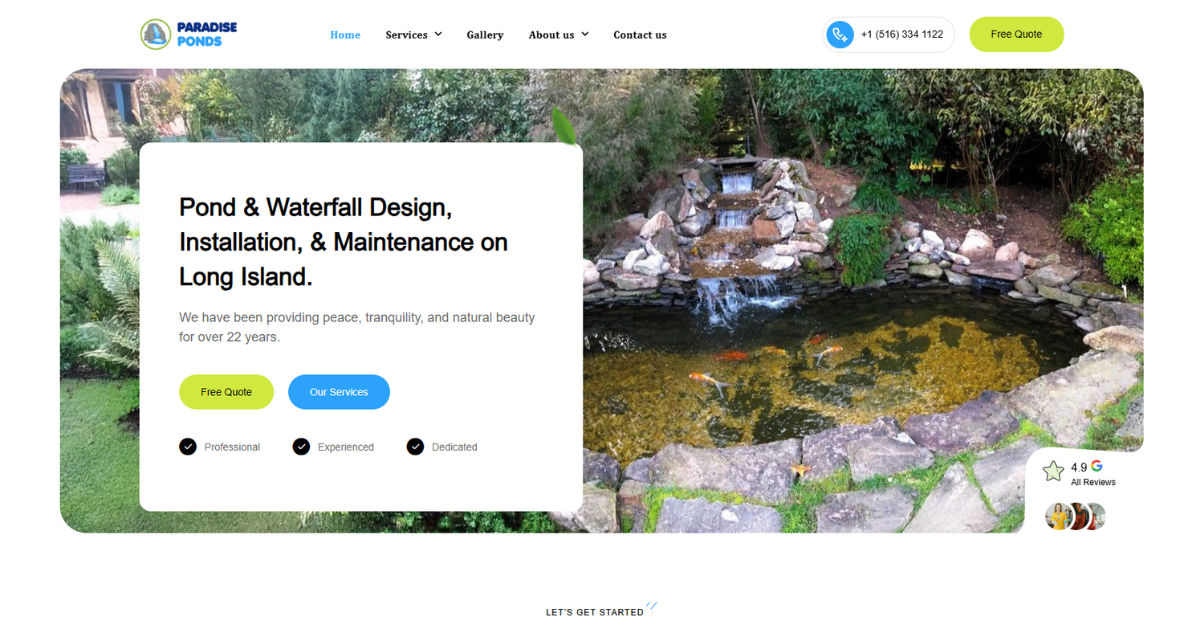
In this guide, we will break down exactly what makes a pond with waterfall Long Island look natural, from design principles to materials and maintenance choices.
A truly natural-looking pond with waterfall Long Island does not appear perfect or symmetrical. Instead, it reflects the irregular beauty found in forests, lakes, and streams.
Every rock, plant, and water flow direction contributes to a scene that feels like it has always been there. Another important aspect of a pond with waterfall Long Island is blending it with the surrounding yard so it feels like part of the environment rather than an added structure.
Throughout this guide, you will learn how professionals design a pond with waterfall Long Island to mimic nature, what mistakes to avoid, and how to maintain a realistic appearance over time. By the end, you will understand why some water features look artificial while others feel like hidden natural gems.
The Natural Look in Water Features
A natural design is never perfectly shaped. A pond with waterfall Long Island looks realistic when it avoids straight lines and rigid forms. Nature is irregular, and successful water features copy that idea.
In a natural pond with waterfall Long Island, the pond edges are uneven, gently curved, and layered with stones of different sizes. This randomness helps the design feel like it was formed by natural water movement over time rather than human planning.
Another key element is depth variation. A pond with waterfall Long Island should not be flat-bottomed or evenly deep. Instead, it should have shallow edges, deeper centers, and hidden shelves where plants can grow. These variations create realism and support aquatic life.
Water movement also plays a role. A natural pond with waterfall Long Island does not have uniform flow. Instead, the waterfall should break into multiple paths, splash over uneven rocks, and vary in speed.
Lighting and reflection further enhance realism. When sunlight hits a pond with waterfall Long Island, it should reflect trees, stones, and plants naturally, not artificial structures.
Site Selection and Natural Integration
Choosing the right location is one of the most important steps in building a pond with waterfall Long Island. The goal is to match the existing landscape rather than fight against it.
A good pond with waterfall Long Island site uses natural slopes or slight elevation changes. This allows gravity to support waterfall flow and reduces the need for artificial structures. Even a small slope can create a believable cascading effect.
Another factor is surrounding vegetation. A pond with waterfall Long Island looks more natural when placed near trees, shrubs, or garden borders. These elements help soften the edges and blend the feature into the yard.
Sunlight exposure is also important. A pond with waterfall Long Island should not be placed in constant harsh sun or total shade. Balanced light helps aquatic plants grow and prevents algae overgrowth while maintaining a natural look.
Finally, visibility matters. A well-placed pond with waterfall Long Island should feel like a hidden natural discovery, not a centerpiece that dominates the yard.
Rock Selection and Placement Techniques
Rocks are the foundation of realism in a pond with waterfall Long Island. Without the right stone selection, even a well-designed pond can look artificial.
Natural river rocks are commonly used in a pond with waterfall Long Island because they have smooth, weathered surfaces. These stones mimic the effects of water erosion over time, which is essential for realism.
Size variation is crucial. A pond with waterfall Long Island should include large anchor stones, medium structural rocks, and small filler stones. This variation prevents the design from looking uniform or manufactured.
Placement is equally important. Rocks in a pond with waterfall Long Island should not be arranged in straight lines. Instead, they should be stacked irregularly, partially buried, and angled in different directions to mimic natural geological shifts.
Water flow direction should also guide rock placement. In a natural pond with waterfall Long Island, stones are positioned so water naturally splits, flows around edges, and drops unevenly to create realistic movement.
Waterfall Design for Natural Movement
The waterfall is often the focal point of a pond with waterfall Long Island, so its design must feel completely natural.
A realistic pond with waterfall Long Island waterfall does not have a single straight drop. Instead, it is usually multi-tiered, with water flowing over several rock levels. This creates variation in sound and movement.
Water should also spread unevenly across surfaces. In a natural pond with waterfall Long Island, some water streams are thin while others are thicker, depending on rock shape and placement.
Another key feature is hidden structure. A pond with waterfall Long Island should conceal pipes, liners, and pumps behind rocks and plants so that nothing artificial is visible.
Sound design matters too. A natural pond with waterfall Long Island produces a soft, layered water sound rather than a loud, uniform splash. This can be adjusted by changing rock angles and drop heights.
Plant Selection and Natural Growth Patterns
Plants bring life to a pond with waterfall Long Island and are essential for achieving realism.
Native plants are the best choice for a pond with waterfall Long Island because they naturally blend with the local environment. They also require less maintenance and support local wildlife.
Aquatic plants like water lilies, reeds, and floating vegetation help soften the water surface of a pond with waterfall Long Island. These plants reduce reflections that can make the pond look artificial.
Around the edges, tall grasses and shrubs help blend the transition between land and water. A pond with waterfall Long Island looks most natural when there is no sharp boundary between garden and pond.
Plant density also matters. A realistic pond with waterfall Long Island is never over-planted or too empty. Balanced coverage creates a natural ecosystem feel.
Water Flow and Circulation Balance
Water movement is one of the most noticeable features of a pond with waterfall Long Island, and it must be carefully controlled.
A natural pond with waterfall Long Island has gentle circulation that prevents stagnation without creating artificial-looking turbulence. The flow should be strong enough to move water but soft enough to appear natural.
Pump selection plays a major role. A properly sized system ensures that a pond with waterfall Long Island maintains consistent movement without overwhelming the design.
Hidden tubing and underground circulation systems help maintain a clean appearance. In a natural pond with waterfall Long Island, mechanical elements should never be visible.
Flow variation is also important. Some areas of a pond with waterfall Long Island should have stronger currents, while others remain calm to mimic natural water bodies.
Filtration and Ecosystem Balance
A natural appearance depends heavily on water clarity and health. A pond with waterfall Long Island requires proper filtration to maintain balance.
Biological filtration is essential in a pond with waterfall Long Island because it supports beneficial bacteria that break down waste naturally. This reduces the need for chemical treatments.
Mechanical filtration removes debris such as leaves and dirt. A clean pond with waterfall Long Island looks more natural because cloudy water can make it appear neglected or artificial.
Plant-based filtration also helps. Aquatic plants absorb nutrients and improve water quality in a pond with waterfall Long Island, creating a self-sustaining system.
Balanced ecosystems reduce algae growth, which is important for maintaining the visual clarity of a pond with waterfall Long Island.
Lighting and Nighttime Natural Effects
Lighting can dramatically change how natural a pond with waterfall Long Island looks after sunset.
Soft, warm lighting is best for a pond with waterfall Long Island because it mimics moonlight and firelight rather than harsh artificial brightness.
Underwater lights can highlight movement in a pond with waterfall Long Island, especially around waterfalls where water texture becomes more visible at night.
Strategic placement is key. Lights should be hidden behind rocks or plants so that the source is not visible in a pond with waterfall Long Island.
Over-lighting should be avoided. A natural pond with waterfall Long Island looks calm and subtle at night, not overly bright or dramatic.
Maintenance for a Natural Appearance
Regular maintenance is necessary to preserve the natural look of a pond with waterfall Long Island.
Leaf removal is important, especially in wooded areas. A clean surface helps a pond with waterfall Long Island look like a natural water body rather than a neglected pool.
Seasonal trimming of plants ensures that a pond with waterfall Long Island does not become overgrown or messy. Controlled growth maintains balance.
Checking water levels and pump function helps maintain flow consistency in a pond with waterfall Long Island.
Algae control is also essential. A well-maintained pond with waterfall Long Island has clear water and visible depth.
Common Mistakes That Reduce Natural Appearance
Many designs fail because they ignore natural principles. A pond with waterfall Long Island often looks artificial due to symmetry or over-design.
Using too many identical rocks is a common mistake in a pond with waterfall Long Island. This creates a manufactured look.
Another mistake is overly straight edges. A pond with waterfall Long Island should never have geometric borders.
Overcrowding plants or leaving the pond empty also reduces realism in a pond with waterfall Long Island.
Visible equipment is another issue. Pipes or pumps that can be seen immediately break the illusion of a natural pond with waterfall Long Island.
Conclusion
A natural-looking pond with waterfall Long Island is the result of thoughtful design, careful material selection, and ongoing maintenance. Every detail, from rock placement to plant selection, contributes to the illusion that the feature is part of nature rather than a built structure.
When designed correctly, a pond with waterfall Long Island becomes more than a backyard feature—it becomes a peaceful ecosystem that blends seamlessly with its surroundings. The sound of flowing water, the movement of plants, and the reflection of light all work together to create a relaxing environment.
Ultimately, what makes a pond with waterfall Long Island look natural is not perfection, but controlled imperfection. Nature is irregular, and the best designs embrace that truth instead of resisting it.
A successful pond with waterfall Long Island feels like it has always been there, quietly existing as part of the landscape. With the right approach, any outdoor space can achieve this natural beauty and lasting tranquility.